Saturday, September 10, 2022

Eye-Boggling Scenery at Jasper National Park

Edith Cavell was a British nurse who saved a lot of lives during WWI and helped Allied soldiers escape from German-occupied Belgium. For her heroics, she was arrested and executed in 1915. In 1916, Mt. Fizthugh in Jasper National Park was renamed Mt. Edith Cavell.  

Mt. Edith Cavell is the most prominent peak in the Alberta province.   

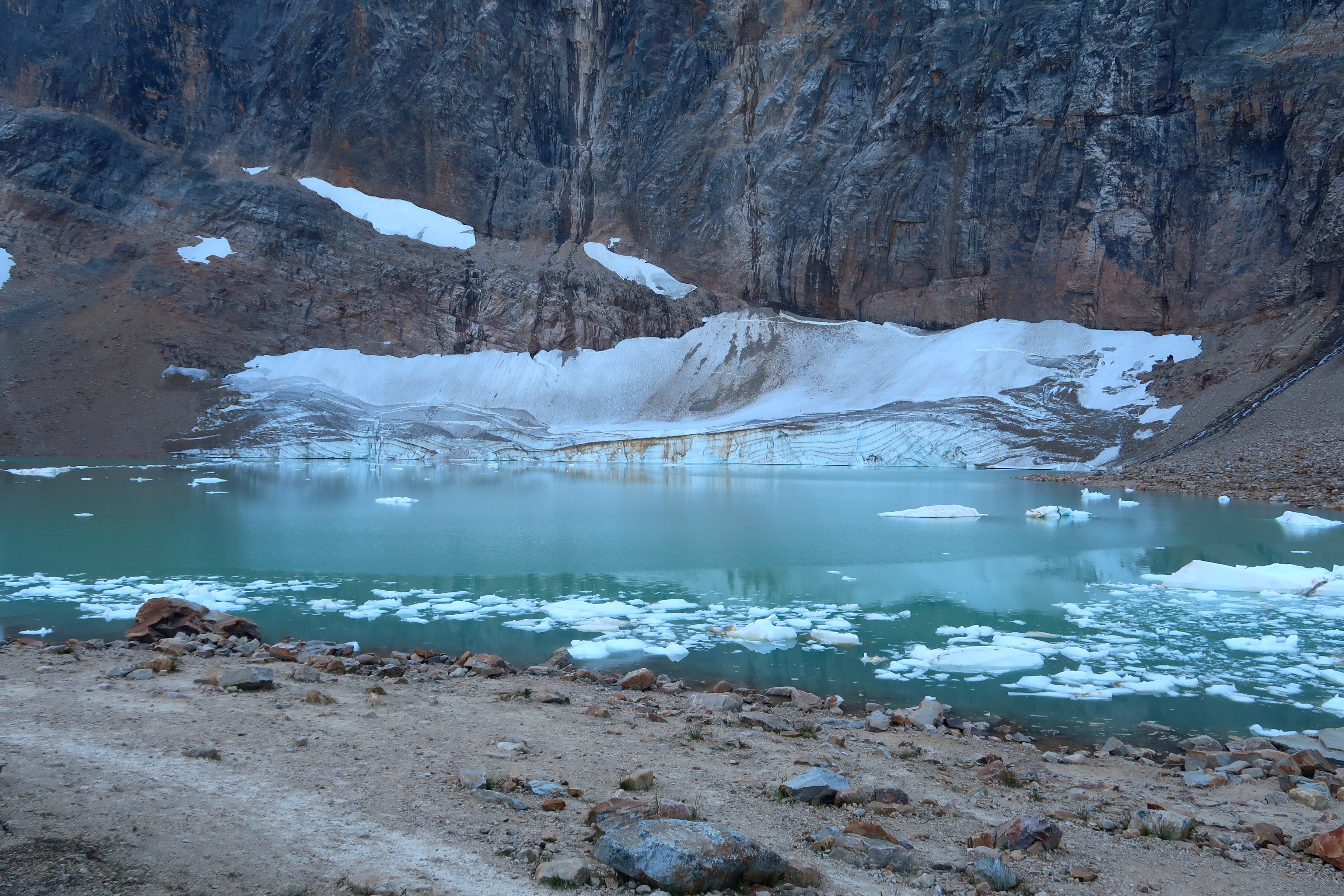
The long and windy road up to the trailhead is well worth the effort as the peak stands in the background of a beautiful glacial lake:

Complete with floating ice:

And a glacier melting faster than it is supposed to:

And, sediment-induced artistry:

All in all, Mt. E-C gave us one of several eye-boggling experiences in Jasper National Park.  It's the kind of scenery that makes me really glad that digital cameras have taken the place of analog ones... so that I can snap away without driving myself into bankruptcy (does anyone remember how much film cost?)


Lac Beauvert

On September 6, unbeknownst to us, Canada Parks issued an update on the Chetamon Wildfire near Jasper National Park:  "Now is not the time to visit Jasper National Park." Since that time, rain, cooler weather, and strategic firefighting have managed to get the fire under control, but I feel like a bit of a stupid American having ventured to the park on Sept. 10, seemingly ignoring Canada's warning to visitors.  

A few days prior, all the power in the town of Jasper had gone out... leaving the town to run on whatever individual generator power was available.  All of the campgrounds and many hotels closed and most of the tourists headed elsewhere.   Lulled into complacency by the crystal clear skies and clean air north in Mt. Robson where we had set up base camp, we headed south to Jasper anyway.   

After a bit of hiking at the summit of a nearby mountain, we dropped down in elevation to a modest lake called Lac Beauvert.  My two French names and I (Denise and Michelle) dropped Cucumber the kayak into the "Lake Beautiful Green", and headed out for a paddle.  I would have switched Cucumber over to her French counterpart name (concombre) to make the whole experience French, but her name had a better ring in English.  C'est la vie.   

Because of the tourist exodus from Jasper, I was the only soul on the lake.  The water was so clear that I could see straight to the bottom.  In some places, this meant an expanse of glacial sediment, interrupted only by the occasional log. In shallower places, this meant one rounded rock after another, and in other places, it meant a scattering of golf balls wrought by errant swings of a golf club from the world-renowned course that sat right on the border of the lake. 

While Barry and Lazer hiked around part of the lake and explored the golf course, I paddled, being careful to slap the water as little as possible with each swing of the paddle.  Peace like what surrounded me on Lac Beauvert was so perfect and so complete that I wanted to savor each moment.  Actually, I wanted to bottle it up and take it with me every time I headed into Seattle, every time I woke up too early in the morning with a plate too full, every time life rattled me with another unknown, every time another tragedy broke onto the headlines.... 

But, the only bottle I had in hand while on the lake was my own memory. So it will just have to do for recalling peace and time to contemplate on days when either or both seem impossible.  


Friday, September 9, 2022

50, 70, 90, 100, 110, 50, 90

Sound like a winning lottery ticket?  I thought it did, but because I never buy lottery tickets, I really had no clue.   Looking it up, I found that, apparently, lottery ticket numbers only go from 1 to 45 or 1 to 50, depending on the game.  The truth, then, is obviously that I did not buy a lottery ticket in British Columbia.

Instead on Friday, September 9, we founder ourselves caught up with the "twinning" of the TransMountain oil pipeline. The original pipeline was constructed in 1953 and has safely transported oil from near Edmonton in Alberta primarily to the U.S. midwest to feed the zealous American appetite for oil. Now, for a mere 21.4 billion dollars (CAD), the duplicate pipeline (the "twin") will increase the pipeline capacity from 300,000 to 890,000 barrels a day to enable Canadians to benefit more from the pipeline.  The new pipeline will move enough oil to replace at least 1,400 tanker truckloads or 441 tanker rail cars every day.   

Fascinating?  Well, maybe, but ... why is this relevant to two Americans on vacation in Canada?   Because twinning a 1,150 kilometer pipeline (about 715 miles) involves a huge amount of construction, much of it along Highway 5a from Kamloops to Valemount in BC, a stretch of road that made up most of our drive on Friday.  Every few kilometers, we went from a 100 km/hr or 110 km/hr speed limit to 70 km/hr then 50km/hr for a couple km, then a friendly "Thank you, Resume Speed" sign sent us back to 100+ km/hr only to throttle us back in another few kilometers.  This speed up, slow down, speed up cycle was interrupted only by the occasional "Prepare to stop" sign that sent our speed to 0 km/hr at all too regular intervals during the higher frequency fast, slow, slower, fast cycles along Highway 5a.  It was enough to drive the brakes, the driver, and the passenger crazy (and make poor Lazer carsick).   

Thank goodness for the plethora of provincial parks in Canada.  We stopped north of Clearwater (BC, not Florida) in the North Thompson River provincial park to have lunch and stroll up to a viewpoint that gave us a much needed break and a beautiful view of the confluence of the Clearwater and North Thompson rivers.

And the view at the end of All That Construction... of Mt. Robson, the tallest mountain in the Canadian Rockies, took the edge off of all the frustration of driving miles and miles and miles (km and km and km) of nonstop construction.

Whew... glad I didn't have to spend the whole day grouchy!


Thursday, September 8, 2022

Water, Water ... and Grapes, Grapes... Everywhere

On the second day of our long awaited post-COVID (not) vacation, we are in Kelowna, British Columbia, where I am sure the grapes outnumber the residents and tourists by several orders of magnitude. 

While the orange moon still reminds us that there are forest fires raging to the south, the air in Kelowna is dry and clean, producing a sunrise that is worthy of waking up early (says the night owl).

Because over 85% of wines made in British Columbia are consumed in British Columbia, it is rare for us to enjoy Canadian wines, but today is a day to rectify this deficiency in our lives.  Our first wine tasting stop is at Canada's largest organic winery (Summerhill Pyramid Winery) which hosts a fabulous view:

A rather large bottle of wine:

And of all things, a pyramid -- built to store wine so that it can achieve clarity that is presumably impossible with ordinary storage techniques.  

No day along a lake would be complete without getting into the lake -- which is where Cucumber comes in ... that nice, durable, inflatable kayak that conveniently fits in the back seat along with our suitcases and cooler.  

The only question I have to consider when my head sinks into my pillow tonight is:  Which views were better?  From high above at the winery?  Or at ground level?

Or at water level? 

This is the kind of tough call that I expect on vacation.   


Wednesday, September 7, 2022

The soft, deep sadness of E.C. Manning Park, British Columbia

Still on our first day of vacation in Canada, we drove east headed toward wine country in Kelowna and passed through the over 300 square miles occupied by E.C. Manning Provincial Park. The park is unofficially recognized as the end of the Pacific Crest Trail which stretches over 2500 miles from Mexico to Canada (which is definitely outside of my hiking range and patience).   

Driving through the park, there is no possible way to be underwhelmed by the millions of trees that cover the landscape on both sides of the Trans-Canada highway.  As we pass through these dense forests, I am both awed by the sheer beauty of the dense coverage of these conifers and lost in thought as to how these trees absorb massive amounts of carbon dioxide simply by standing still and photosynthesizing all day long.  As we pull off the road to find a trail map of this massive park, my reflections grow much darker as we view the first of many helicopters that are gathering in the roadside clearing to fight the forest fires that began late in the season this year but are nevertheless wreaking havoc in the ecosystem.  

As these trees burn, they will release all of the carbon dioxide that they have so diligently absorbed over their lifespan.  As we venture further into the park, the air quality and visibility continue to decline, making it impossible to ignore the tragedy of what is burning in the mountains above us.   At the eastern edge of the park, the Manning Resort is largely deserted as the winds are expected to shift tomorrow and shift air quality and visibility from unhealthy to intolerable.

Lightning Lake, normally a massive camping and day use recreation area, will remain deserted as helicopters tap the water to quench the fires. 

I am grateful for all the firefighters who engage in the struggle to contain the fires and the destruction every year during drought season.   But it is impossible to escape the sadness that the smoke and flames bring into my open heart. They trigger the kind of sadness that unlike most grief is not sharp and aching. Instead, it is softer, permeating thoughts, feelings, and fibers of being.  Despite the softness, it still runs deep... and is therefore impossible to ignore.   

While forest fires are part of the natural cycle to refresh, reboot, and nourish a healthy ecosystem, they still break my heart.  And this epidemic of fire that we see and smell year after year in the recent past of the North American West is not natural at all, but part of a global shift in climate that we seem to lack the will and care to mitigate.  

This unnatural shift in the natural world infects the sadness within.  The infection all but guarantees that the feelings won't fall away when fire season comes to an end in the upcoming Fall but will linger over the wet winter months to come.   

Bridal Veil Falls Provincial Park, British Columbia

Something I love about road trips, especially those that involve less than 300 miles a day of driving (and therefore some spare time), is the search and rescue for hidden jewels.  Treasure Hunts!

The little parks, quirky shops, interesting wineries, and other things that will rarely find their way onto Trip Advisor or Lonely Planet are well worth searching out.  On our first day out on our first real vacation since COVID-19 rudely took over our lives, we found one of those hidden jewels just east of Chilliwack, British Columbia. 

Not far off the Trans-Canada Highway, a nondescript road previewed by an equally nondescript sign suggested that we might want to turn right toward the park.  Graced by a gas station that had seen better days on one side of the road and a myriad of litter on the other side, we turned right onto a strip of pavement whose ability to hold two lanes of traffic was highly questionable.  

Once we turned left into the park, all that was marginal about this little, poorly signed road in British Columbia fell away as we entered a remarkably well kept parking lot, a picnic area, and a more than adequate suite of immaculate portable toilets that put many American parks to shame.  

I had no time to even begin a critical analysis of American vs. Canadian parks as we began our walk through a beautiful temperate forest that rivaled those on the Olympic peninsula.

Only fifteen minutes of walking left us at the foot of Bridal Veil Falls.  Even at the end of the drought of a western summer, Bridal Veil still hosted a swath of water falling hundreds of feet over delicate moss covered rock into an unseen pool beneath our field of view.  There was no roar of a massive volume of water hurling itself off the edge of a cliff, but more of a delicate symphony as water misted relentlessly down over the rocks.  It certainly wasn't the biggest, widest, or loudest waterfall in North America, but these falls were totally memorable in part because we were alone at the foot of the falls and in part because the falls were simply unusually delicate despite the high volume of water flow they hosted.   

Bridal Veil reminded me of the value of road trips that involve fewer miles per day, time to wander off the beaten path, and precious opportunities to find hidden jewels.   


Sumas, Washington vs. The Peace Arch

Which way should I cross the international border into Western Canada? Through the Peace Arch Historical State Park that was made to honor the treaties between the U.S. and Britain emerging from the War of 1812?

Or through the unassuming, rural town of Sumas, Washington?

While it may seem that the Peace Arch is a much more glamorous and elegant way to cross the border into Canada,  it also comes with long wait times and lines of cars seeking to pass border control. The Canadian side of the Peace Arch park remains closed because, if it were to open, Americans could enter into the Washington state side of the park and cross into the Canadian side without passing through border control. This creates a significant possibility that an unvaccinated American could end up in Canada and such things are to be avoided.   

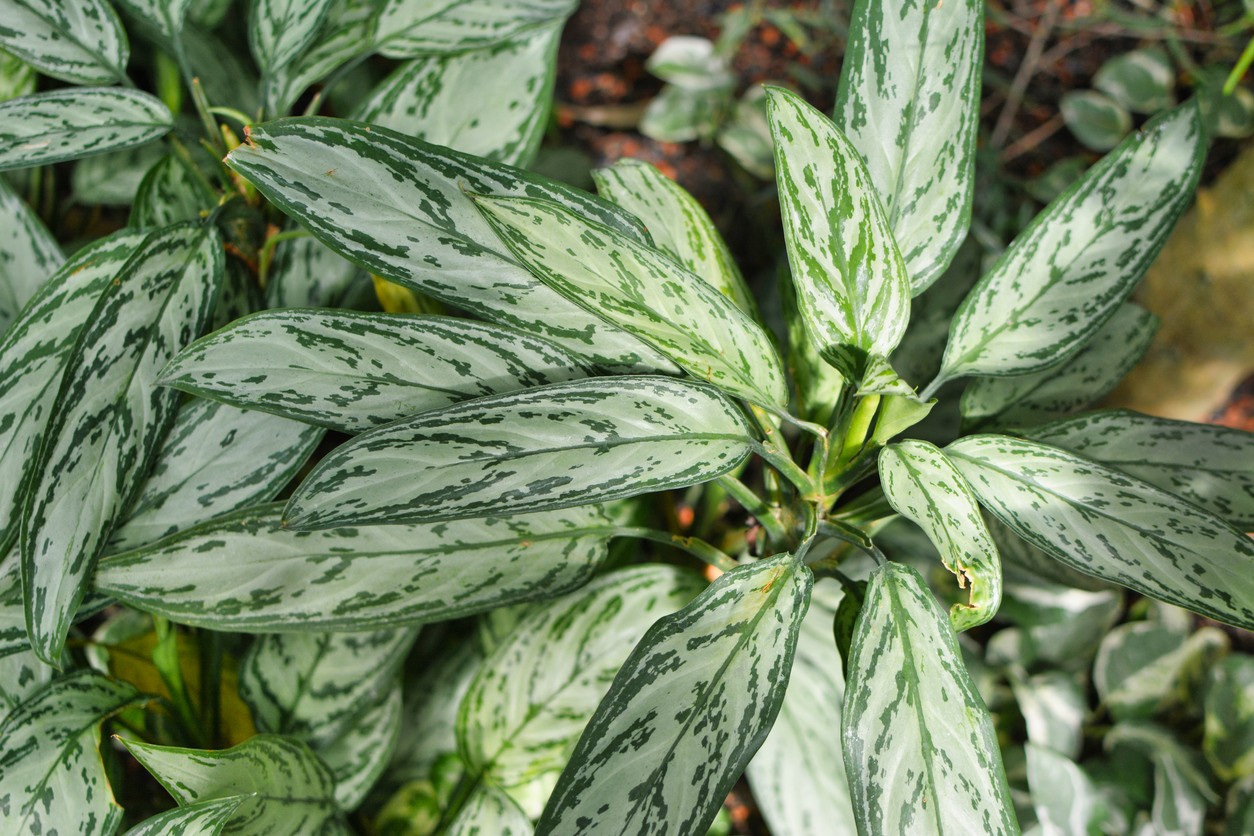
Sumas, while less spectacular and not as stately, has a special place in my heart. Many years ago, I travelled with a friend to Vancouver, BC to help him with moving his mother into assisted living.  This involved clearing out her home and throwing or giving away many things that were precious to her.   One of such precious things destined for the landfill was a large Silver Queen houseplant that she had kept fabulously healthy and happy in her home for many years.   

I imagine you can guess where the story goes from here.  I have a soft spot for all of our green friends on planet Earth (well most of them -- I unfriended nettles and poison ivy some time ago) and I wanted to show respect to the woman and mother whom I had never met. So, naturally, I carried the large, lush Silver Queen out to the van and wedged her in among the other stuffs that had landed there.  

Of course, it didn't occur to me that the border guards at the Peace Arch would care about a lone houseplant... especially at 11 p.m. at night when we reached the border crossing.  I was definitely very wrong on that score and, thanks to my naive assumptions, I had to return to Vancouver to return poor Silver Queen to an empty house. Then, I had to head back down to the border empty-handed.  My friend was not thrilled with the delay. 

I was young and stubborn at the time, so the next day, I headed back to Vancouver, picked up Silver Queen and headed to the Sumas crossing where the Green Friends Inspection Office is located.  There, I encountered a dozen others who were seeking to carry their little plants across the border. There was no shortage of stares as I handed over big, lush Silver Queen (who dwarfed all other plants in the room by two orders of magnitude or more) to be inspected.   

Silver Queen passed inspection and headed home with me. To this day, she sits in my living room, still flourishing, despite my occasional neglect and failure to water her properly.

Silver Queen will always remind me to show respect for lives well lived and to value the elderly.  And, my little adventure in bringing her home will ensure that Sumas, Washington remains a special place in my memory.